
Published February 8, 2022
Show Your Home Some Love: Your February Home Maintenance Checklist

Show Some Love: Your February Home Maintenance Checklist
February is all about the love and what better time to show your house a little extra care, too? Here is your checklist for February home maintenance— just to ensure you’re keeping up with all of the tasks that come with home ownership:
Replace HVAC filters
Replacing your HVAC filters— or cleaning them regularly if you have fiberglass filters— is the key to keeping air in your home clean. Regular attention to your filters can also alleviate allergens and dust particles in your home, which is especially important for members of your family with respiratory issues or if you have pets.
Filter replacement will also help you keep both energy costs down and ensure your unit lasts; clogged filters force your units to work harder, which could lead to damage and force you to purchase a new unit earlier than expected.
If you just have the cheap, disposable, cardboard filters, you can simply toss the old one and replace the filter in the ceiling. Make sure you check each level of the house, replacing all filters, and order any new ones needed. It’s a good idea to buy these in bulk and keep them around. Most of these cost just a few dollars and should be replaced every one to three months to keep your system running efficiently.
If you have permanent filters with the fiberglass frames, simply turn off your unit, locate the service panel, and open it to find the filter. Remove it, rinse it using running water, let it dry completely, and then reinsert it into your unit.
Check with your HVAC specialist should you have questions about your filters, but the minimum efficiency reporting value (or MERV) should give you an idea of your air filtration.
Check caulking around showers and bathtubs
Bathrooms are a breeding ground for mold, and the caulking around your showers and tubs should be checked. You might be able to get away with simply using an oscillating cleaning tool or razor to remove some mold, along with a mold-removal cleaning product.
If you have a lot of mold, however, you may want to completely remove the caulking with a razor, clean the surrounding areas, and then replace the caulk. You can easily do this yourself by following a YouTube or DIY video and grabbing a few supplies, like a caulking gun and painter’s tape from any supply store.
If you live in a particularly moist climate, it’s a good idea to open windows in each room of your house every day for just a few minutes to allow air to circulate and keep mold at a minimum. A little mold is totally normal, but keep checking so a small maintenance issue doesn’t become something larger.
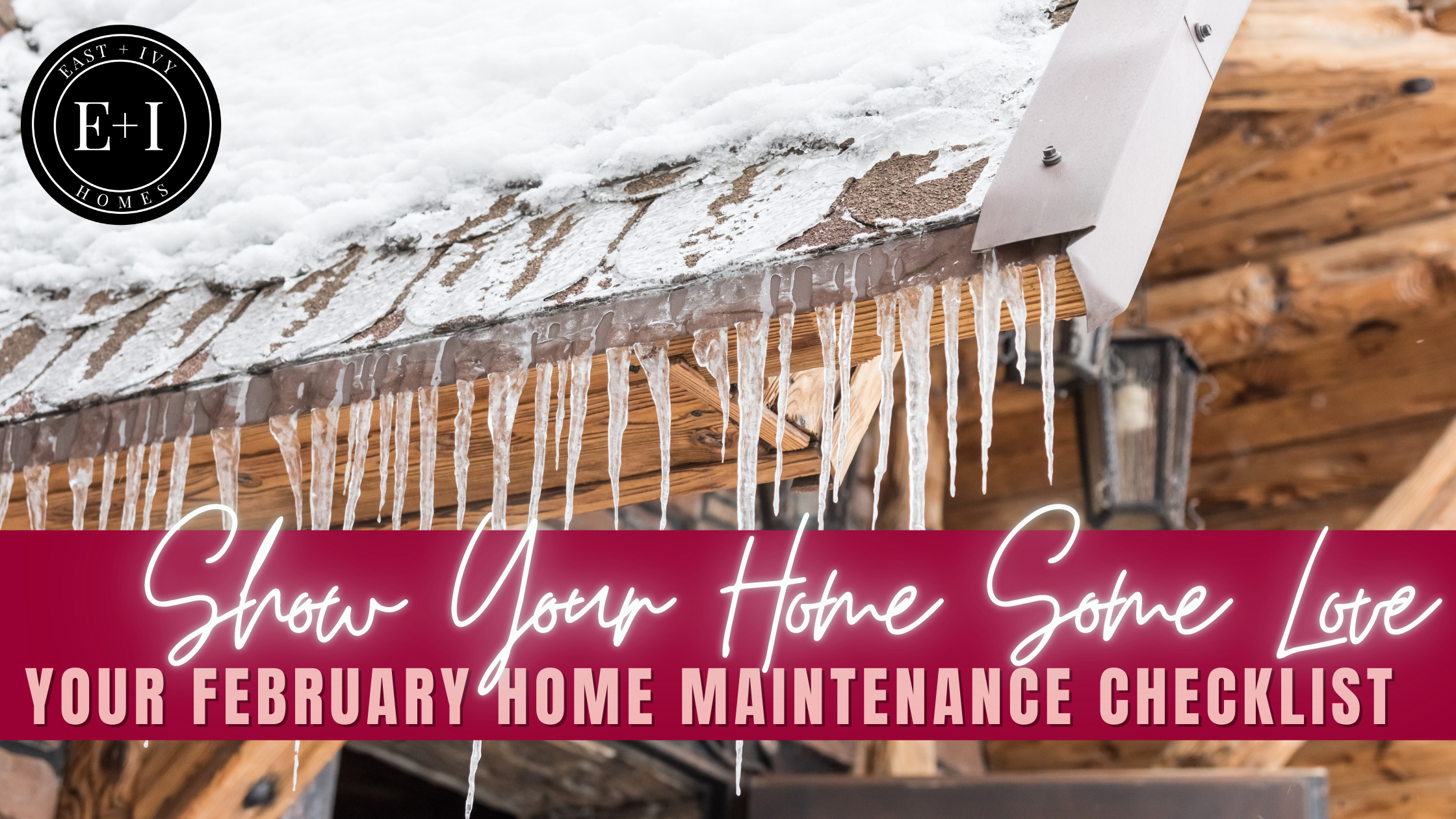
Check for ice dams and icicles
Because we live in an area that sees snow— and sometimes lots of it— it is imperative to add this item to our checklist: checking for ice dams. This is what can happen when heat gets trapped in your attic and ice forms on your roof and into your gutters. It can be rather expensive to fix and if you just moved in or didn’t build your house, you may not know how well insulated your attic is.
Definitely check for ice dams and icicles after every big storm, but if you’ve had a mild winter, February will do just fine. If you do spot some icicles or any blocks of ice forming in your gutters, you can usually easily break them apart safely from the ground with an aluminum roof rake. If that doesn’t work, you can melt the ice with a calcium chloride ice melter— found at any home supply store. Again, the internet is your friend here to give you more guidance and provide videos of how to do this yourself, but if this task gives you pause, you can call a friend or local handyman for back-up. A professional roofer will also have some tips for how to prevent ice dams in the future so they don’t cause damage or more stress to you as the homeowner each winter season.
Run water and flush toilets in unused spaces
Lastly, if you have rooms that don’t get as much use, it’s a good idea to run water and flush toilets every now and then to prevent pipes from bursting due to colder temps this time of year. And it’s always a good idea to let a faucet drip overnight if you’re expecting below-freezing temperatures, as a busted or frozen water pipe is likely the last thing you want to deal with in the winter.
We hope you’ve found this list helpful. As always, be sure to reach out to the professionals in your area should you have any questions, but there is a ton of information and how-to steps available online if you’d like to keep your maintenance costs low and take care of these items yourself. Feel free to reach out to our team if you’d like a recommendation for a local HVAC professional, roofer, plumber, or any other service your house may need.

Nicole Canole
CEO|REALTOR | East + Ivy Homes | Keller Williams Metro Center | PLACE
or another way